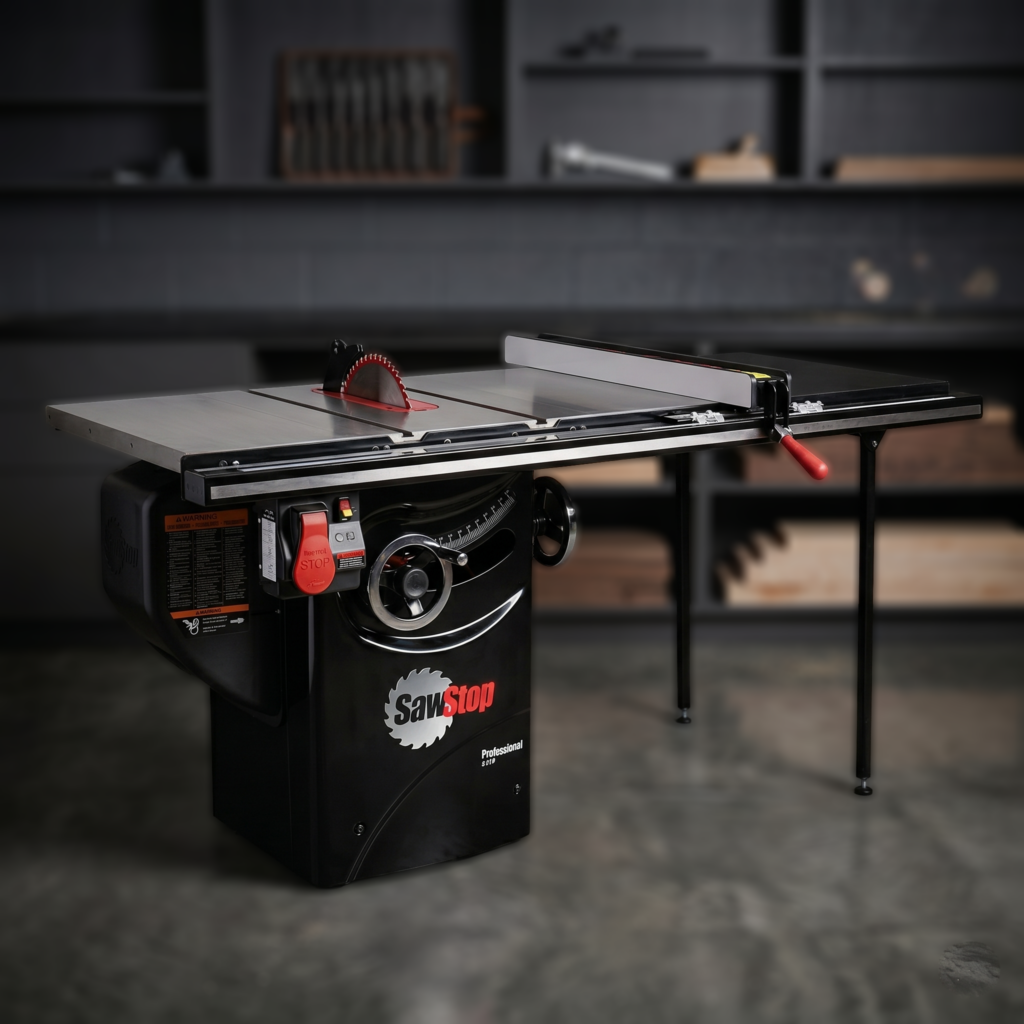
Table saw injuries remain one of the most common — and most preventable — accidents in a cabinet shop. SawStop built its reputation on a patented blade-braking system designed specifically to reduce the severity of those accidents, and it’s become a standard consideration for shops updating their equipment or opening a new location.
How the Safety System Works
SawStop’s table saws use a patented automatic braking system that stops the blade upon contact with skin, dropping the blade below the table surface in a fraction of a second. The goal isn’t to prevent contact entirely — it’s to turn what would normally be a serious, often life-altering injury into a minor cut. For shops running saws daily across multiple operators, that difference matters both for worker safety and for reducing lost production time after an incident.
Configurability for Different Shop Sizes
The SawStop Contractor Saw line is built around a modular approach — shops can start with a base model and add components like a mobile base, sliding crosscut table, or router table extension as production needs grow. The fence and rail system is built from heavy-gauge steel, designed to hold its position accurately over years of daily use without drifting out of square.
What to Consider Before Upgrading
- Shop floor space and whether you need a mobile base for flexibility
- Whether your current workflow would benefit from a sliding crosscut table or integrated router table
- Blade and safety cartridge replacement costs after an activation (a factor worth budgeting for, even if activations are rare)
- Available power supply, since some configurations may require different electrical requirements than a standard contractor saw
Is It Worth the Investment for Your Shop?
For shops with multiple operators, apprentices, or high saw usage throughout the week, the safety system alone often justifies the cost difference compared to a standard contractor saw — both from a liability standpoint and in terms of reducing downtime from injuries. Shops that primarily use CNC or panel saws for most cutting, with a table saw reserved for occasional work, may find a standard saw sufficient, but it’s worth evaluating actual usage patterns before deciding.
See SawStop Options for Your Shop
Browse SawStop table saws and accessories at Advanced Hardware Supply, or contact us to talk through the right configuration for your shop.
