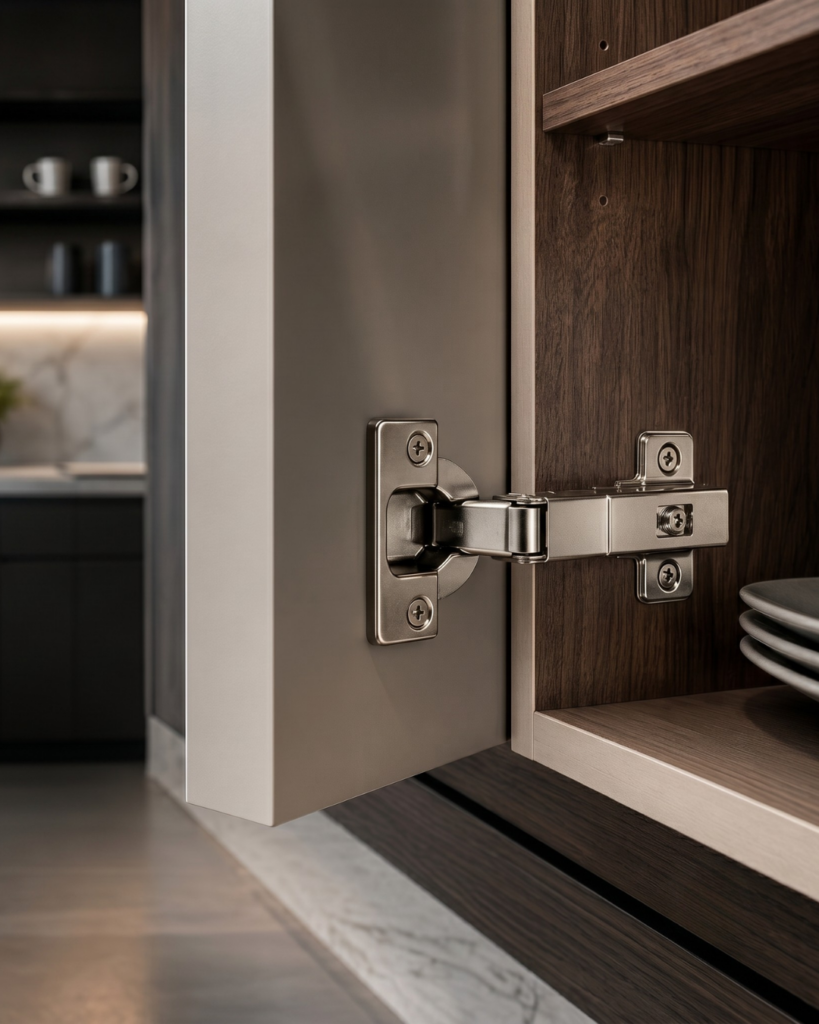
Soft-close hinges are one of the easiest upgrades you can make to your kitchen or bathroom cabinets. Instead of doors slamming shut, these hinges use a built-in damper to control the closing motion, allowing the door to close slowly, smoothly, and quietly.
Beyond reducing noise, soft-close hinges also help protect your cabinets. The controlled closing action reduces stress on the cabinet frame, hinges, and doors, helping extend the life of your cabinetry while creating a more premium user experience.
The good news: you don’t need to be a professional to install them. With the right tools and about 15 minutes per door, you can upgrade your entire kitchen in an afternoon.
What You’ll Need
- A Phillips screwdriver or cordless drill
- A pencil or marker
- Your new soft-close hinges (matched to your door thickness and overlay type)
- A tape measure
- Optional: a jig or template for consistent hole placement
Step-by-Step Installation
- Remove the cabinet door by unscrewing the existing hinges from the door and the cabinet frame.
- If your new hinges use the same hole pattern (cup size and spacing), you can reuse the existing holes. If not, mark new hole positions using a template or by measuring from the top and bottom edges of the door.
- Attach the new hinge cup to the door using the provided screws — don’t overtighten, as this can strip the wood.
- Reattach the door to the cabinet frame by screwing the hinge mounting plate into place.
- Close the door slowly and check the alignment. Most soft-close hinges have small adjustment screws (up/down, left/right, and depth) to fine-tune the fit.
- Test the soft-close action by opening the door and letting it swing shut on its own — it should ease into place without slamming.
Common Mistakes to Avoid
The most common issue homeowners run into is buying the wrong hinge type for their cabinet style — face frame cabinets and frameless (European-style) cabinets use different hinges, and overlay amount (full, half, or inset) also affects which hinge you need. Before buying, measure your current setup or bring a photo of your existing hinge to the store. Another common mistake is over-tightening mounting screws, which can strip the particleboard commonly used in cabinet doors — if this happens, a small wood plug and reinserting the screw usually solves it.
Need the Right Hardware?
Shop soft-close hinges and cabinet hardware at Advanced Hardware Supply — in store or online.
