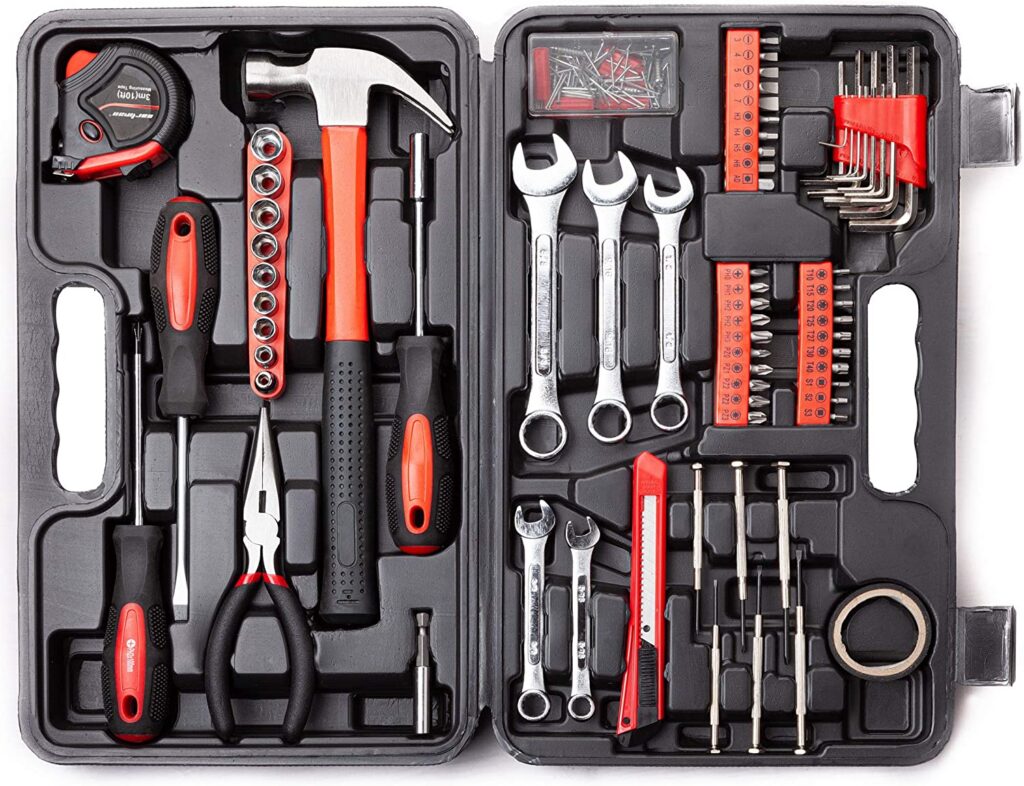
You don’t need a fully stocked workshop to install hinges, drawer slides, or new hardware at home. Most cabinet hardware projects can be done with a small set of basic tools — the key is having the right ones on hand before you start, so you’re not stopping mid-project to run to the store.
A little preparation can make the installation process faster, easier, and more accurate. Whether you’re replacing cabinet pulls, installing concealed hinges, or upgrading drawer slides, using the proper tools helps ensure a professional-looking result while reducing the risk of damaging your cabinets or hardware.
With just a few essential tools, you can measure accurately, drill clean pilot holes, secure hardware properly, and make small adjustments for a perfect fit. Investing in these basics not only saves time on your current project but also prepares you for future home improvements and cabinet upgrades.
The Core Toolkit
- Cordless drill/driver with adjustable clutch (prevents overtightening and stripping screws)
- Phillips and flathead screwdrivers
- Tape measure
- Pencil or marker for marking hole positions
- Level (a small torpedo level works well for cabinet doors)
- Combination square, for checking that doors and drawers sit at a true right angle
Helpful Extras for More Precise Results
- Installation jig or template (for consistent hinge and pull spacing across multiple doors)
- Painter’s tape (to mark measurements without marking the wood directly)
- Clamps, to hold drawer fronts or doors steady while you work
- A small step stool, for reaching upper cabinets safely
Choosing the Right Drill Bit and Driver Bit
Most cabinet hardware uses standard Phillips-head screws, but the exact bit size matters more than people expect — a bit that’s slightly too small can strip the screw head, especially in the softer particleboard commonly used in cabinet construction. If you’re installing several doors or drawers, keep a spare driver bit on hand, since these wear down faster than most people realize.
Common Mistakes to Avoid
The most common issue with DIY hardware installs isn’t a lack of skill — it’s rushing without the right tool for the job. Using a manual screwdriver instead of a drill with clutch control, for example, makes it much easier to overtighten and strip screw holes. Skipping a level or square can also lead to doors that look slightly crooked once everything is reassembled, even if each individual step was done correctly.
Gear Up for Your Next Project
Shop tools, jigs, and templates at Advanced Hardware Supply.
